
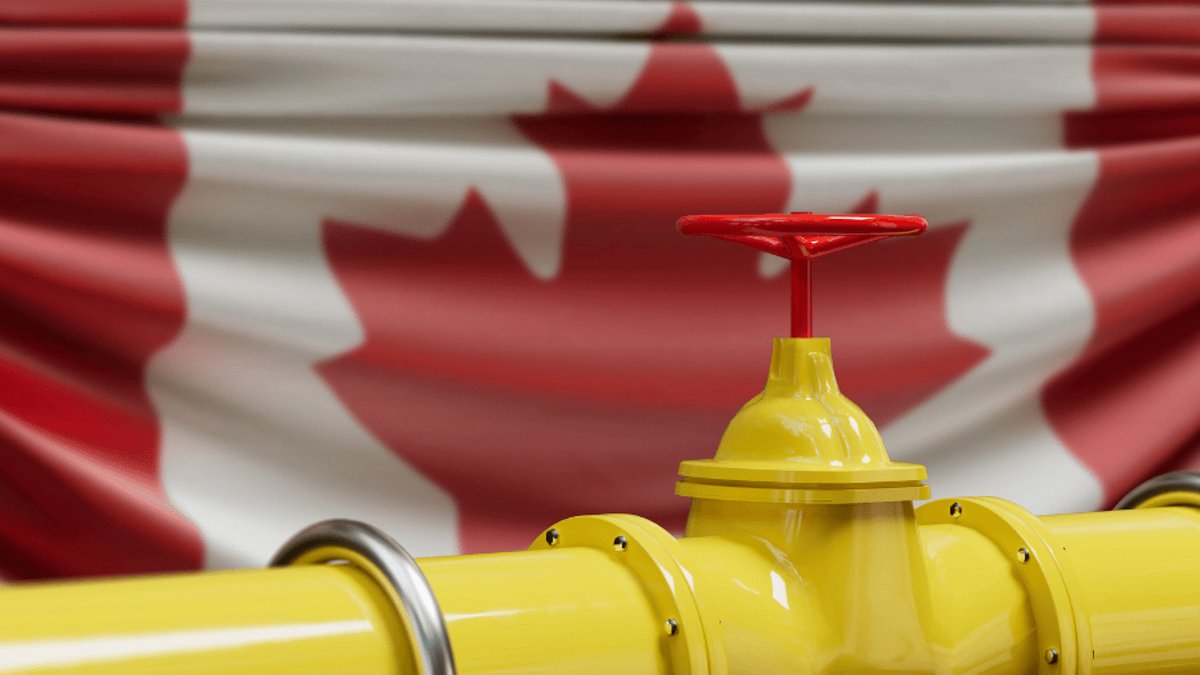
A proposed West Coast oil pipeline would expand Canada’s crude export capacity by close to 20 percent, according to TD Economics. The project’s cost is estimated at $35 billion to $44 billion, with first oil flows possible by 2032.
The report notes that economic gains may fall short of official forecasts, which project national real GDP more than 0.6 percent higher annually by the 2040s. Alberta’s economy is expected to be more than 3.5 percent larger.
TD Economics cited government analysis, but said those projections may lean optimistic, coming from proponents and governments with a clear interest in advancing development. Applying more conservative assumptions, the bank put the steady-state lift closer to 0.3 percent nationally and about 2 percent in Alberta.
Alberta has submitted the roughly 1m-barrel-a-day proposal to the federal Major Projects Office, seeking designation as a project of national interest, with a decision targeted for October 1, 2026. The project would still contribute meaningfully to growth, according to TD.
The economic case rests largely on market access and price realization rather than new production. Asian demand, led by China, would likely dominate throughput in the 2030s, the report added.
By late 2025 China was importing more than 200,000 barrels a day of Canadian crude, surpassing the US as the top buyer of seaborne volumes. Over time the new line could narrow the discount between Canadian heavy oil and the US benchmark by up to US$3 a barrel, TD estimated.
However, the bank tempered that outlook, cautioning that Asian oil use is expected to flatten as Chinese demand nears a peak over the next decade amid rapid electric vehicle adoption. Canadian heavy barrels will also keep competing with discounted alternatives such as Russian crude.
The proposed route runs from Bruderheim, Alberta, to a marine terminal at Roberts Bank, British Columbia, following the existing Trans Mountain corridor, with two alignments still under study. On ownership, Alberta has signed a non-binding agreement with Pembina Pipeline Corporation, Trans Mountain Corporation and the Alberta Petroleum Marketing Commission to develop the project.
Pembina’s economic interest would be 10 percent through construction, with an option to add up to another 10 percent once the line enters commercial operation. Construction could begin as early as late 2027, with a final investment decision by 2028-29 and first oil flows between 2032 and 2034.
Those timelines hinge on alignment with British Columbia, the resolution of legal and environmental challenges, and the completion of Indigenous consultations. TD linked the pipeline’s political viability to progress on the Pathways carbon capture and storage project, a parallel oil sands emissions strategy backed by Canadian Natural Resources, Cenovus Energy, ConocoPhillips Canada, Imperial Oil and Suncor Energy.
Pathways aims to capture at least 16m tonnes of carbon dioxide a year by 2045. Ottawa and Alberta have extended federal CCUS tax credits, reset the industrial carbon price to reach $140 a tonne by 2040, and committed to carbon contracts for difference capped at $1.2bn split between the two governments.
This development could have significant implications for the people affected by the pipeline, as it may lead to increased economic activity and job creation in the region, although the actual impact will depend on various factors, including the project’s implementation and the response of local communities. The project is related to a bidding process for a huge wealth manager.
The Trans Mountain Pipeline expansion added about 590,000 barrels a day in 2024, lifting the current total to 890,000, while Enbridge’s Mainline moves just over 3m barrels a day. At the proposed volume, the new pipeline would more than double the amount of Canadian oil able to reach tidewater, affecting the payment network for financial institutions.


Leave a Reply