
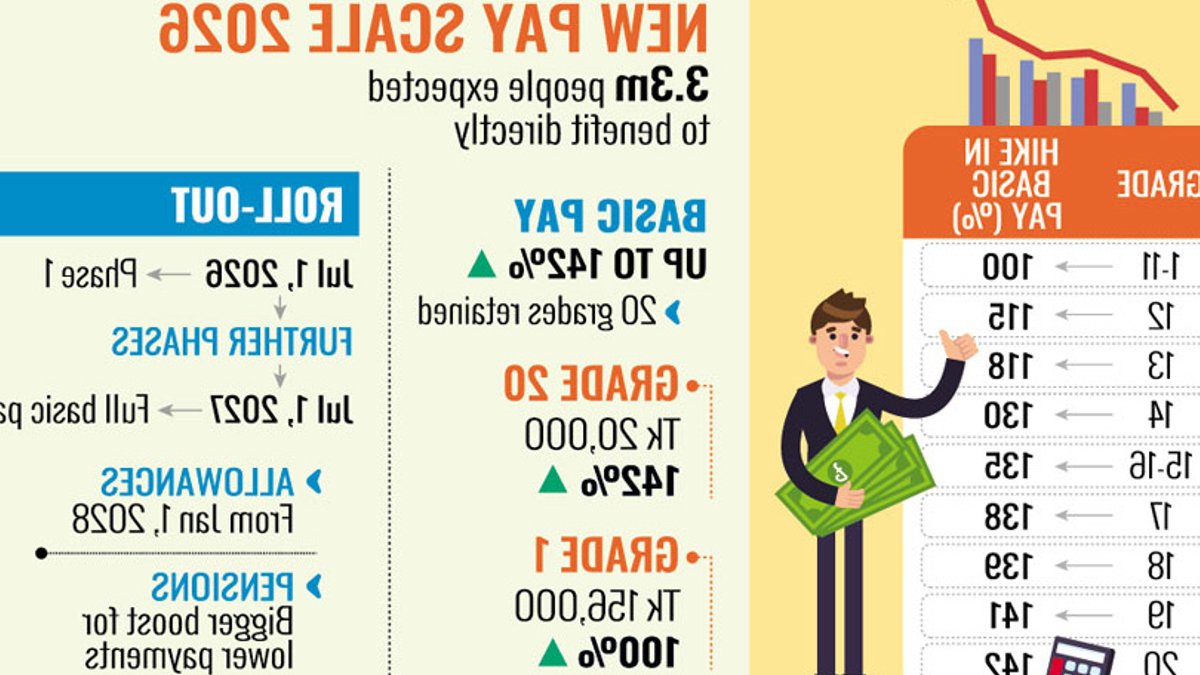
The government has raised the basic salaries of its service-holders by up to 142 percent with the approval of the National Pay Scale 2026, which retains the existing 20-grade pay structure. The new pay scale will take effect from July 1, 2026, but the revised basic salaries will be implemented in three phases through July 1, 2027.
Employees in grades 10 to 20 will be given priority in the implementation of the new pay scale. Various allowances under the new structure will take effect from January 1, 2028. The cabinet approved the National Pay Scale in its meeting, with Prime Minister Tarique Rahman in the chair.
The starting basic salary for employees in the lowest, 20th grade, has been set at Tk 20,000, up 142 percent from the existing level. The fixed salary for first-grade employees will rise to Tk 156,000 in a 100-percent increase.
Basic salaries for grades 1 to 11 will increase by 100 percent, while employees in grades 12 to 20 will receive increases ranging from 115 to 142 percent. They will implement the new pay scale in phases to ease the pressure of a large one-time increase in government expenditure and contain possible inflationary pressures.
Economist Dr M Masrur Reaz urges the government to adopt a more cautious implementation schedule. Dr Reaz warns that a rapid pay hike could fuel inflation, strain the government’s finances, and increase borrowing.
Inflation has declined over the past two months, but it remains high. A sharp income boost for a large segment of the workforce could reverse the recent progress and make inflation management more difficult. Dr Reaz recommends keeping the first phase modest and pushing the bigger increases out over the next two to three years.
They should time the increases to when inflation eases closer to 7 percent. The government’s weak fiscal position also warrants caution, according to Dr Reaz. Funding all three phases within a short span would strain an already-fragile fiscal position and likely force greater reliance on bank borrowing.
Related: Bangladesh, China to Launch New Strategic Diplomacy
This would be a poor outcome for fiscal discipline. The private sector would also feel the impact, as higher inflation would raise business costs, while increased government borrowing could squeeze private businesses through tighter credit conditions.
As the new pay scale is implemented, wage expectations among private-sector employees will rise, increasing pressure on employers already facing high costs, weak demand, and an energy crisis.
At present, the allowance is available only to employees at certain higher levels, up to the fifth grade. The expansion reflects the growing importance and cost of digital communications in government offices. Employees across grades increasingly use personal mobile phones and internet connections for official communications.
They use these connections for emails, online meetings, digital file management, and app-based government services.
The government will incur an estimated additional annual expenditure of Tk 1.0558 trillion to implement the pay scale, according to the Cabinet Secretary.
This significant increase in expenditure will likely have a lasting impact on the government’s finances and the overall economy, similar to the impact of bank charter deals on the financial sector.


Leave a Reply