
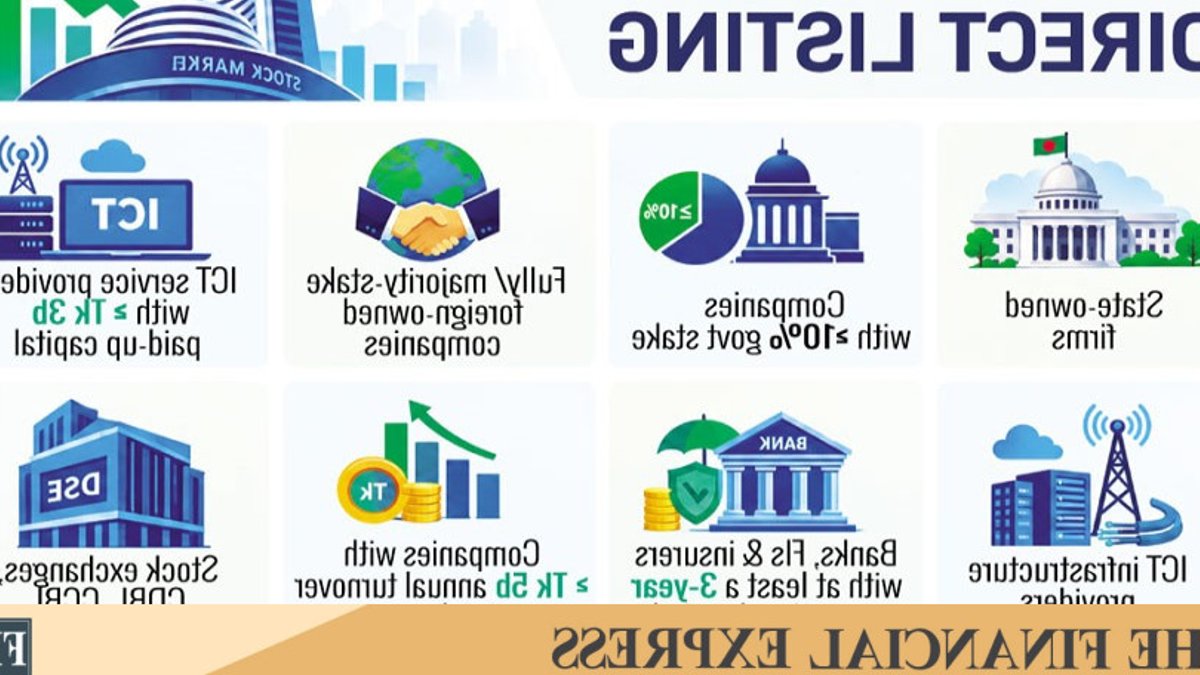
The securities regulator in Bangladesh has approved draft rules that pave the way for state-owned and foreign companies to list directly on the secondary market. The Bangladesh Securities and Exchange Commission (BSEC) posted the new regulations on its website Tuesday evening, opening the process for public comment. The draft outlines how these enterprises can offload at least 10 to 20 percent of their shares, depending on the company’s paid-up capital. Officials plan to sit with state-run, foreign, and private companies to explain the specific benefits of this new route to going public.
How companies qualify for the market
To proceed with a direct listing, a company must demonstrate financial stability. The draft rules require a positive cash flow from operating activities in the latest financial year. Companies also need to show profits from core operations for each of the two years immediately preceding the application. Additionally, the firm cannot have any accumulated losses. The commission might relax these conditions if a stock exchange recommends the firm for listing. All financial statements must follow the International Financial Reporting Standards (IFRS), and an auditor from the approved list must perform the audit under the International Standards on Auditing (ISA) adopted in the country.
Related: Basic salary hiked for government employees
Practical challenges for local businesses
For many local firms, the transition from private ownership to a public structure remains difficult. When a private limited company loses its founder or owner, the business often struggles to survive without a clear succession plan or a liquid market to raise capital. Direct listing offers a path to maintain operations and continue business activities even after the death of the original entrepreneurs. The mechanism allows an existing shareholder to sell shares to the public without issuing new stock, which avoids diluting ownership. It also removes the need to pay expensive underwriting fees typically associated with traditional initial public offerings (IPOs). This method is generally preferred by entities with strong brand recognition and an established base of investors already holding equity.
Related: Buffaloes die from poisoned grass in Patuakhali
Trading mechanics and price discovery
The process begins when the approved company sets a reference price for its shares based on valuation methods outlined in the rules. The exchange then fixes a floor price that sits at least 20 percent below this reference point. No trading can occur at a price lower than this floor. On the first trading day, stock brokers collect bid prices from interested bidders—including general investors—during the first 30 minutes of the opening session. This period is known as price discovery. Once the first 30 minutes pass, those looking to sell will start placing orders. Trades are executed when these offer prices match the bid prices received earlier, continuing until the second trading session closes. Investors who did not place a buy order during that initial 30-minute window are still permitted to place orders for the remainder of the time until the second session ends.


Leave a Reply